Author Archives for
- Abstracts
- Posted by
- Comments Off on Psychophysiological analysis of iridological markers of individuality
INTRODUCTION
Chapter 1. PSYCHO-PHYSIOLOGICAL PROBLEMS
IRIDODIAGNOSTICS (REVIEW OF LITERATURE).
1.1. System substantiation of iridological psychodiagnostics.
1.2. Pathological markers of the iris.
1.3. Statement of the problem and research objectives.
Chapter 2. METHODS OF PSYCHO-PHYSIOLOGICAL
RESEARCH.
2.1. Object of research and organization of experiments. jv 2.2. Measurements of iridological parameters.
2.3. Methods of multi-level research of individuality.
2.4. Mathematical and statistical processing.
Chapter 3. SYSTEM OF IRIDOLOGICAL
INDIVIDUAL MARKERS.
3.1. Individual differences in iridological markers of individuality (statistics).
3.2. Correlation-factorial analysis of total indicators i of the iris.
3.3. Types of stress ring profiles (Q-factor analysis).
3.4. Conclusions.
Chapter 4
4.1. Correlation between iridiological indicators and personal-temperamental properties.
4.2. Correlation between iridological parameters and EEG-indicators of the properties of the nervous system.
4.3. Systemic connections of iridological indicators with multi-level properties of individuality.
4.4. Wave patterns of connections between iridological indicators and hierarchical properties of individuality.
4.5. Conclusions.
Introduction to the dissertation (part of the [...]
- Abstracts
- Posted by
- Comments Off on Iridodiagnosis in diseases of the hepatobiliary system and kidneys
Overall fifty patients with chronic hepatitis and 50 patients with concurrent pathologies were examined. The patients with chronic active hepatitis and in coexisting pathologies showed more profound depression of the immunity system as well as striking alterations on the iris of the eye. The former patient group received basic therapy, while the latter one were given immunomodulating agents against the background of basic therapy. Iridodiagnosis will, we believe, help in detecting concurrent pathologies of the hepatobiliary and urinary systems. The dynamics of the pathological signs in the iris is strongly related to the clinicoimmunological picture of the illness. Iridodiagnosis is a reliable test of a therapeutic effect in patients with chronic diseases of the hepatobiliary system and in those cases having this medical problem concurrently with the urinary system pathologies.
[Original Article in Russian] N V Lukash, L V Pol’skaia, I L Kliaritskaia Pubmed: https://pubmed.ncbi.nlm.nih.gov/9005066/- PMID: 9005066
- Abstracts
- Posted by
- Comments Off on Red-Channel Based Iris Segmentation for Pupil Detection
Iridology is the science and practice that helps to learn the health status through the examination of the structural aspects of an eye. Iris segmentation is an important phase in Iridology that aids to recognize iris signs and identify aberrant organ activity. The primary elements of iris segmentation are the detections of the iris and pupil. However, iris segmentation is greatly impacted by noises and images with low quality. The proper method for iris and pupil detection supports improving the result of iris segmentation in Iridology. This study provides a computer vision-based method to segment the human eye’s iris and pupil using an alternate method. The procedure is based on the red channel information of the image with various image processing operations. Iris images from the UBIRIS.v1. Dataset, which was taken in less restrictive image acquisition conditions, is used in an experiment. This method gives a unique way for iris segmentation with an accuracy of [...]
- Abstracts
- Posted by
- Comments Off on CARDIOVASCULAR ABNORMALITIES DETECTION THROUGH IRIS USING THRESHOLDING ALGORITHM
ABSTRACT
Cardiovascular diseases have proven to be the leading reason of death worldwide. To identify cardiovascular diseases at an early stage, often very expensive pathological tests are required. A less costly alternative method for determining the conditions of the organs is highly appreciated, and Iridology is one such popular method. Many researchers have proposed cardiovascular disease identification systems by combining Iridology with computation system. In this study, a novel model for detecting heart abnormalities using Iridology is proposed.
The entire process includes several stages such as target capture, pre-processing, autocropping based on histogram analysis, heart area extraction, and classification using a thresholding algorithm.
The cropping method and classification process are both affected by the iris photography procedure. The iridology expert at Clinic in Indonesia labelled the data as abnormal and normal. The precision produced by the system ranges from 80-83%. Some errors occur due to ineffective cropping. The failed outcome may affect the segmentation process [...]
- Books
- Posted by
- Comments Off on La Chromotherapie Irienne – Dr Pierre Fragnay
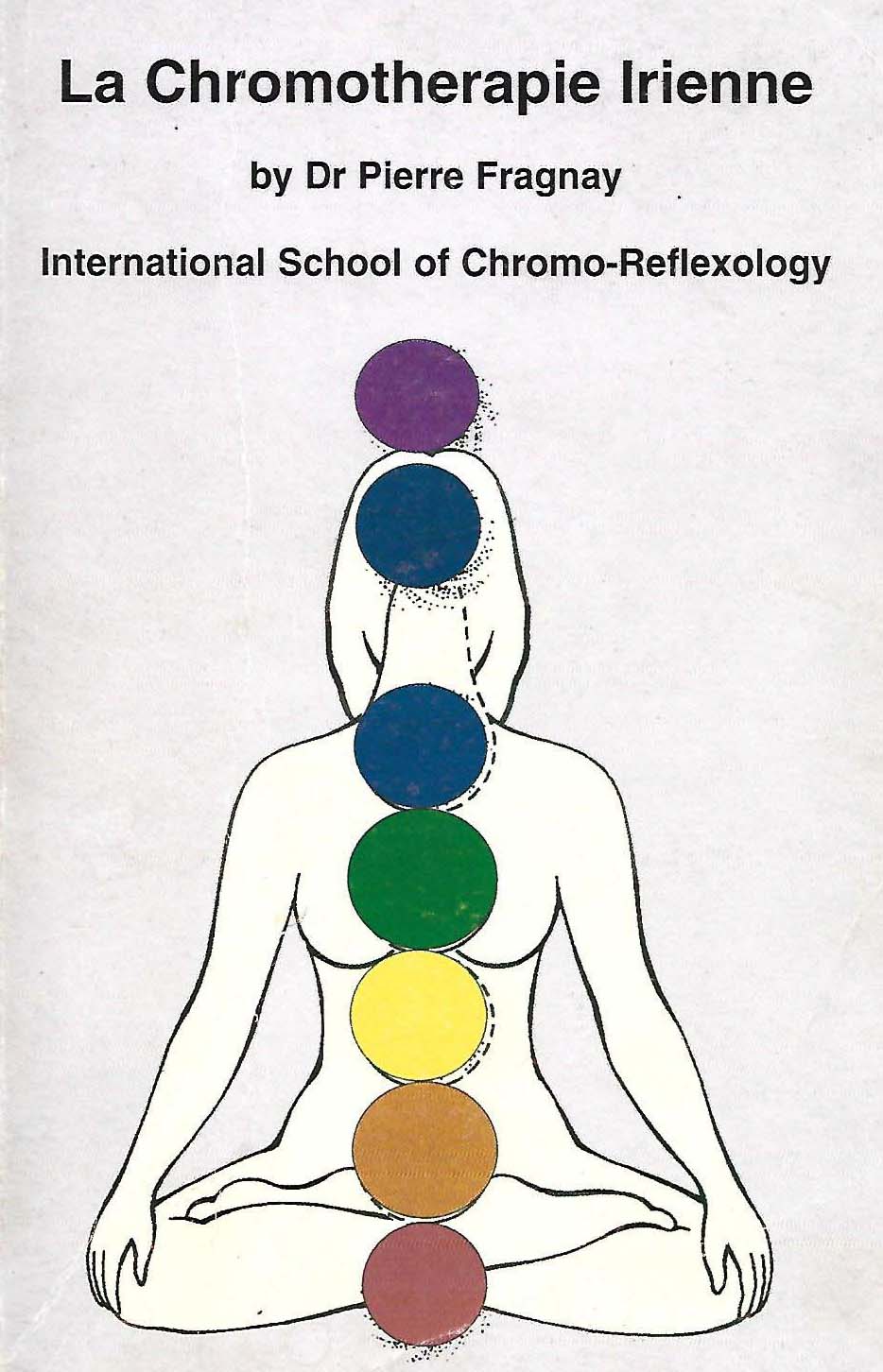

Dr Pierre FRAGNAY was born in Lyon in 1948 and died in 2014. He was an iridologist recognized throughout Europe.
He also traveled all over the world to teach this method of analysis.
A graduate in medicine and surgery at the University of Lyon in 1976, he had filed with the first thesis on acupuncture in sports medicine.
Doctorate in Medicine on September 16, 1976 (University of Lyon).
Dr Pierre Fragnay worked for three years at the Institut de Pasteur in Lyon. In addition, he [...]
- Abstracts
- Posted by
- Comments Off on Correlation between iridology and general pathology
Source: http://europepmc.org/article/MED/12723182
- Abstracts
- Posted by
- Comments Off on Iridoscopy in the diagnosis of internal pathology in dermatoses
Source: http://europepmc.org/article/MED/2139291
- Abstracts
- Posted by
- Comments Off on Diagnostic possibilities of iridodiagnostics in general clinical practice
An older interesting abstract from 1989 that was not previously found in database.
Abstract The state of the iris has been studied in 817 persons, of them in 150 workers of oil-industry, in eye office conditions. Iridodiagnostics was performed in one and the same person using two methods: with the help of a slit lamp “SL-56” and a magnifying glass. For topic diagnostics, a scheme of projection zones of the iris was used, proposed by Vida and Deck. The results obtained were compared with clinical diagnosis made in the out- or in-patient’s departments by internist, gynaecologist or other specialists. In 80.1% of the subjects a pathologic sign situated in the corresponding zone of the iris has almost precisely indicated the affected organ. Among the whole number of subjects in 37% of persons the revealed pathologic signs of the iris have indicated the physicians to the organ where the disease had not been earlier diagnosed. Authors: [...]- Abstracts
- Posted by
- Comments Off on Novel Approach of Molecular Genetic Understanding of Iridology: Relationship Between Iris Constitution and Angiotensin Converting Enzyme Gene Polymorphism
Iridology is the study of the iris of the eye to detect the conditions of the body and its organs, genetic strengths and weaknesses, etc. Although iridology is not widely used as a scientific tool for healthcare professionals to get to the source of people’s health conditions, it has been used as a supplementary source to help the diagnosis of medical conditions by noting irregularities of the pigmentation in the iris among some Korean Oriental medical doctors. Angiotensin converting enzyme (ACE) gene polymorphism is one of the most well studied genetic markers of vascular disease. We investigated the relationship between iridological constitution and ACE polymorphism in hypertensives. We classified 87 hypertensives and 79 controls according to iris constitution and determined the ACE genotype of each individual. DD genotype was more prevalent in patients with a neurogenic constitution than in controls. This finding supports the hypothesis that D allele is a candidate gene for hypertension [...]
